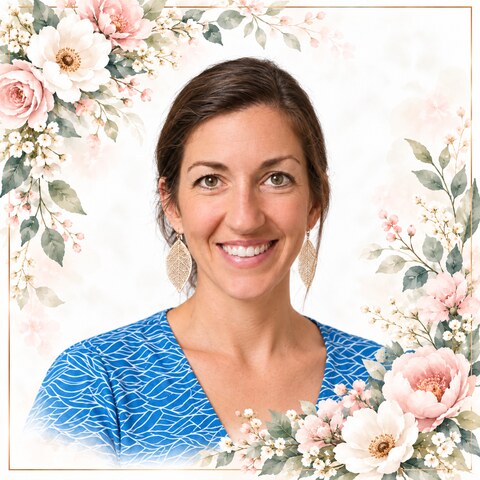
Sunghwa (Seonghwa) ceremony for Diana
Wednesday, November 4, 2026 · 13:00 (Vienna)
In your time zone
Vienna 13:00 · New York 7:00 AM · Chicago 6:00 AM · Seoul 9:00 PM
Meynertgasse 39–45, 3400 Klosterneuburg, Austria
Open in Google Maps
The Zoom link will be posted here before the service.
Flowers and gifts
Flowers and gifts may be sent to Meynertgasse 39–45, 3400 Klosterneuburg, Austria, to arrive on 3 or 4 November — not before or after.
Diana — A Life of Deep Feeling, Unwavering Faith, and Heart-Centered Living
Diana was born in Frankfurt, Germany, the second daughter, second of four children. From an early age, she was a person of extraordinary feeling—passionate, expressive, sensitive, and full of life.
She loved nature, dancing, latte macchiatos– which she affectionately called “chacho labracho”, and the kind of conversations in which people moved beyond the surface and shared what was truly in their hearts. Connection mattered deeply to Diana. She wanted to know people, to understand them, and to make them feel that they mattered.
By her own account, Diana’s childhood also held considerable pain and loneliness. She experienced bullying at school and often struggled to feel seen, heard, and understood. Believing in her own worth did not always come easily.
Perhaps because of these experiences, Diana developed a deep sensitivity toward the inner lives of other people. She knew what it meant to long to be understood, and much of her adult life became an effort to offer that understanding to others.
In the midst of her own struggles, Diana turned toward the faith of her parents and found a sense of purpose. She wanted her life to serve something greater than herself. Faith became not simply something she believed, but something she wanted to express through the way she lived.
That desire eventually led her into healthcare.
Diana wanted to offer more than competent medical care. She wanted people who were suffering to feel the presence of another human being—someone who would listen, notice their fear, and treat them with tenderness. In a profession that can easily become hurried and impersonal, she took pride in preserving the human touch.
This same desire shaped her spiritual life.
Through her church’s European network, Diana attended workshops and formed friendships that crossed countries and cultures. On her own initiative, she travelled to Lusaka, Zambia, where she supported character-education initiatives. Her faith increasingly became something she sought to put into practice through relationships and service.
If there was one place Diana called home, it’s Cheong Pyeong Heaven and Earth Training Center in the mountains of South Korea– where she often returned year after year to serve as both participant and nurse.
In 2014, at such a faith workshop in Cheong Pyeong, Diana met the man who would become her husband–Stephan Winter. Four years later, Diana and Stephan were blessed in marriage, and began building their lives together.
Diana carried many dreams with her into that life.
She dreamed of helping people heal and reconnect—with themselves, with one another, and with a deeper sense of purpose. She wanted to create spaces in which people could speak honestly about their inner lives and feel supported in becoming healthier and more whole.
Even when confidence faltered and resources were limited, Diana kept trying.
She wrote a book. She organised retreats. She guided online healing circles- in Germany and Austria. She co-launched a women’s empowerment programme and created courses designed to help women pay attention to their emotional and spiritual lives.
These projects were never merely professional ambitions. They came from somewhere deeply personal.
Diana wanted others to receive some of the understanding, encouragement, and affirmation that she herself had so often longed for.
At thirty-three, another of Diana’s great dreams came true: she became a mother.
Her son Lian became the centre of her daily devotion. Diana brought the full intensity of her heart into motherhood. She loved him fiercely and poured herself into the ordinary, demanding, beautiful work of caring for him.
Motherhood revealed perhaps more clearly than anything else what was always at the centre of Diana’s life: her heart.
Two years after Lian's birth, just as Diana was beginning to give shape to the future she had imagined, she was diagnosed with breast cancer.
What followed became one of the most difficult chapters of her life.
Diana explored many paths toward healing. Her background in alternative medicine strongly influenced her early decisions, and she pursued fasting, herbal treatments, alternative therapies, and eventually conventional medical treatment as well.
There were chemotherapy treatments and three breast operations. There were periods of hope when it seemed that the disease might finally be behind her, followed by devastating setbacks.
At one point, Diana was told after a screening that she was cancer-free. Later, we learned that the results had been misinterpreted. Three months afterward, further spread of the cancer was discovered, and eventually the goal of treatment changed from cure to controlling the disease.
For a young woman who still dreamed of raising her son, developing her work, travelling, loving, creating, and growing old with her family, this was extraordinarily difficult to accept.
Yet Diana continued searching.
She continued hoping.
And she continued reaching toward the people she loved.
Throughout those years, the friendships she had cultivated throughout her life became a remarkable source of support. Friends and strangers gave financially, prayed, wrote messages, visited, helped with her family, and carried responsibilities when they could no longer carry everything themselves.
For Diana, relationships were never an abstract idea. During her illness, she experienced what community could mean when people chose to make another person's burden partly their own.
Still searching for healing, Diana travelled with her family once again to South Korea—a place she regarded as the home of her heart. There she devoted herself deeply to the spiritual practices of her faith.
Moving a family across the world while facing serious illness was enormously difficult. Diana’s family needed somewhere to live, work, support, and a kindergarten for Lian while trying to give him some sense of stability.
Once again, people stepped forward.
Through their generosity, the idea of “one family under God” became something tangible—not simply words, but people making room for another family when they needed it most.
Despite everything Diana tried, her health continued to decline.
Her final years brought enormous physical suffering and emotional anguish. She endured treatment, uncertainty, disappointment, pain, and the knowledge that there remained so much she still wanted to do.
She wanted more time.
More time with Lian.
More time with family and friends.
More time to create.
More time to help others.
More time simply to live.
And yet, when we think about Diana's life, her illness should not be the thing that defines her.
Cancer was something that happened to Diana. It was not who Diana was.
Diana was the woman who danced.
She was the woman who could spend hours in a deep conversation.
She was the woman who crossed borders because she wanted her life to serve something meaningful.
She was the caregiver who wanted frightened and vulnerable patients to feel the warmth of another human being.
She was the woman who dreamed, created, experimented, failed, began again, and continued searching for ways to help people heal.
She was a friend who valued genuine connection.
She was a woman of powerful emotions and strong faith.
She was a loving wife.
And she was the mother who loved her son with her whole heart.
Diana wanted her life to be defined by “heart-centered living.”
For her, those were more than attractive words.
They described something she spent her life trying to practice–even though at times she couldn’t always succeed.
Heart-centered living meant paying attention to the human being in front of you.
It meant listening beneath the surface.
It meant taking emotions seriously.
It meant allowing vulnerability rather than pretending everything was fine.
It meant trying to bring compassion into healthcare, friendship, marriage, motherhood, spirituality, and community.
Diana did not live this perfectly. None of us do.
But she pursued it sincerely.
Perhaps that is one of the clearest ways to understand her legacy.
A woman who once struggled so deeply to feel seen devoted much of her life to helping other people feel seen.
A woman who knew loneliness placed enormous value on connection.
A woman who knew emotional pain tried to create spaces for healing.
And a woman who possessed a very large heart tried, again and again, to live from it.
That heart remains present in the people Diana loved.
It remains in the friendships she built.
It remains in the people she cared for.
It remains in the work she began.
And most profoundly, it remains in her son, Lian, who will carry forward a part of his mother throughout his own life.
Diana’s life bears witness to a sincere and enduring effort: to grow in love, to be present, to live with meaning, and to care faithfully for the people entrusted to her.
If there is something we can carry forward from her life, perhaps it is the principle she herself returned to so often:
to live from the heart.
To notice one another.
To listen.
To make room for another person's humanity.
To tell people they matter while we still have the opportunity.
And to build lives in which love is not merely something we feel, but something we practice.
That was Diana’s aspiration.
That was something she embodied.
And that is part of what she leaves with us.
Memories
Share a memory of Diana for her family and friends to read.
Support the family
I’m deeply grateful to everyone who has contributed. Thanks to your generosity, we have reached the goal we originally set to help cover Diana’s funeral expenses. Thank you so much.
For those who have asked whether they can still contribute, the GoFundMe will remain open. Any additional support will help my son and me as we begin the difficult transition into life without his mom, including the financial adjustments that come with rebuilding our everyday life as a family of two.
There is absolutely no expectation to give further. Your kindness, messages, prayers, and support have already meant more to us than I can express.
Thank you for helping us honor Diana and for standing with my son and me during this time.